By Gary Lee
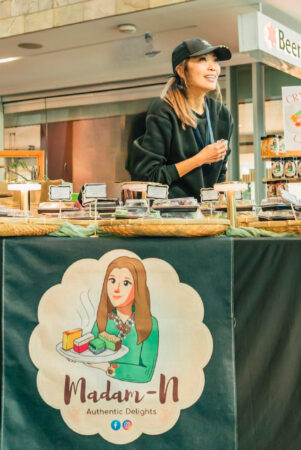
Madam-N and I glanced at one another and simultaneously uttered ‘Eh, I don’t know how to translate the word kueh to English leh?’
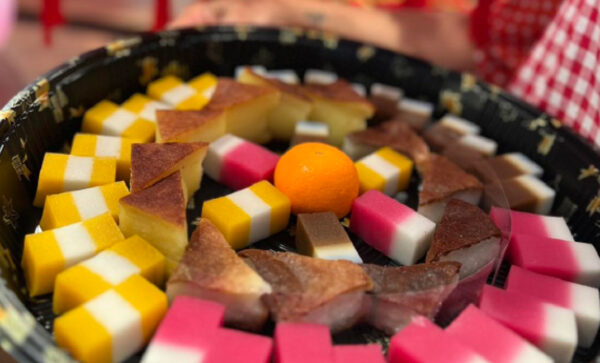
So, there is no English word that can directly represent what kueh means. It can be spelled in three different ways: kueh, kue, kuih. They come in various shapes, sizes and colours. They can be eaten for breakfast, a morning or afternoon snack, or as dessert. When displayed at shops, they collectively form a beautiful kaleidoscope of shapes and colours.
Kueh is a traditional dessert that embodies the rich cultural heritage of Malaysia, one that is particularly influenced by Nyonya traditions. Historically, Nyonya are the female descendants (Baba, being the male) of the union between Chinese settlers and local Malays. This cultural blend, Baba Nyonya, or Peranakan culture is a hybrid of Chinese and local cultures layered with Portuguese, Dutch and English influences due to colonisation.
Kueh are more often steamed than baked, and therefore, are very different in texture, flavour and appearance from western cakes or pastries. These treats are characterised by their vibrant colours, intricate designs, and a unique combination of textures, ranging from chewy to creamy. There are similar variations in Indonesia, Brunei and Singapore.
The word kueh is of Chinese origin, but the tastes are distinctively Malaysian and Indonesian. Smooth, creamy coconut milk blended with rice flour, mung bean starch or tapioca flour. They are flavoured with sugar and mild touches of salt, as well as pandan for fragrance akin to vanilla. They are steamed, baked, and sometimes grilled into tender, bouncy jelly-like desserts. Glutinous rice, yam, sweet potato, shredded coconut, sago, gula melaka (palm sugar) and blue butterfly pea are also common ingredients used.
Each kueh tells a story, representing the fusion of Malay, Chinese, and Indian influences, making them not just a dessert but a celebration of Malaysia’s diverse cultural tapestry.
I caught up with Sherlyn, the person behind Madam-N who makes these delicious treats from her kitchen in Point Cook.
How long have you lived in Point Cook?
We migrated from Malaysia 13 years ago. After surveying a few suburbs, we fell in love with Point Cook — and it has been our home ever since.
Why Madam N, the name? How did it come about?
The ‘N’ comes from my middle name. I wanted the business name to feel personal and meaningful, so ‘Madam N’ felt like a natural choice. Many customers assume the ‘N’ stands for ‘Nyonya’—but it actually doesn’t (Ed: It doesn’t appear she wanted to share either!)
How did you start making kueh as a business?
When we moved here 13 years ago, there weren’t many kueh vendors, especially in the western suburbs. I often craved kueh and would make them to share with friends. One day, a friend suggested I start selling them. At first, I was sceptical because my son was still very young and I didn’t have much free time. Eventually, I decided to give it a try, starting small from my home and registering the business with Wyndham Council. Fast forward, I have been making kueh now for over a decade.
Why is making kueh special to you?
Making kueh is special to me because it connects me to my heritage. I come from a Peranakan family. I also simply love eating kueh myself, which makes the process even more enjoyable. The recipes I have now are improved versions of the old agak-agak (estimate-and-guess) style, refined over time for consistency and taste. Every kuih carries memories of home, family, and celebrations. It’s more than just food — it’s a way to share a part of my culture with the community.
*Author’s note: For most kueh, there is often no original recipe. The tradition has been passed on for generations and for many, including grandmothers and aunties, a big part of making the dessert was by agak-agak or approximation. Anyone who learns from recipes will find this very annoying. Agak-agak is about feeling your way through a recipe, a pinch of salt, a splash of water or a little bit of sugar.
How did you learn the art of making kueh?
I learned the art of making kueh from my family, especially growing up in a Peranakan household where traditional recipes were passed down through generations. Back then, everything was made by feel and instinct. Over the years, I refined these recipes through practice, research, and feedback, improving them for consistency while preserving the authentic taste and soul. I’ve also created a list of fusion kueh, blending traditional flavours with a modern twist to keep the tradition alive in a fresh and exciting way.
You make a lot of kueh. Which ones are your favourites and why?
It’s hard to choose because I love so many, but kuih talam, talam bubur cha-cha and seri muka are some of my absolute favourites. Over the years, I’ve created around 22 different types, experimenting with new flavours while preserving the essence of tradition.
Have you tried kueh before? Perhaps it’s time you did!