By Xin Ying and Hannah Vandenbogaerde
Journalism graduates University of Melbourne
The Victorian government has announced it’s extending its free public transport initiative throughout May with half price fares to kick in after that.
The measure, first introduced in April due to rising fuel prices driven by the US-Israeli war in the Middle East, aims to encourage residents to leave their car at home.
For many in the West the strategy has been welcomed. Esha, who lives in Wyndham and frequently travels to the Melbourne CBD for university, says it “saves me a large amount of money”.
Hevani Loloa, from Deer Park, also relies on public transport for work. While she acknowledges that delays have become more frequent since the announcement she remains supportive of the policy “as long as everyone can benefit from it.”
Sam Robinson, a long-term Wyndham resident, doesn’t use public transport for his daily commute, but still supports the free public transport implementation saying the government “is doing a good thing”.
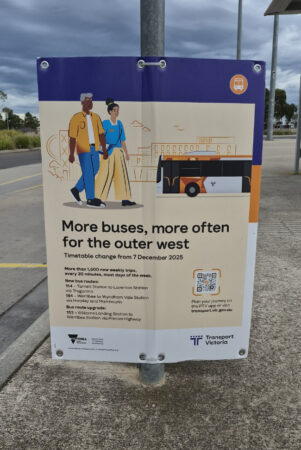
“People can use the V/Line to travel to suburbs like Eynesbury which are literally out of nowhere,” he says. “It helps these regions develop better.”
However, with limited access to services, many feel that free public transport does not improve their daily life at all.
On the contrary, it seems to lay bare the deeply rooted shortcomings of the public transport system within the West.
In Deer Park, residents Maddy and Lee Murfitt say they struggle to get their children to school due to limited routes and long distances to bus stops adding that daily travel is time-consuming, unsafe and exhausting, placing additional pressure on families.
“Access to reliable public transport is essential for education and daily life,” Maddy says. “Without it, students in outer areas are at a disadvantage compared to those in more central locations. Improving transport would create more equal opportunities for everyone.”
Lee says she has requested a direct bus route that won’t put her children’s safety in jeopardy but says it was declined by both the council and Transport Victoria.
Deer Park resident Jem Matthews has similar complaints. “There are buses obviously, but I have two small children. So I am not going to catch a bus with two kids. There are no train stations near the shopping centres around me.”
She adds that the population in the West has a high proportion of younger families and those on lower incomes.
“It is unfortunate that they are the ones missing out on accessing free public transport.”
For Naz Memon, getting to work has become increasingly difficult.
Naz recently moved from Seddon to Thornhill Park but quickly regretted the decision after realising there was little to no public transport available.
“I was looking for public transport, and I have found there are no buses to or around the area in ten kilometres so I can catch the bus to go to the station.”
She adds that parking at the nearest station is extremely limited.
“People park their car or dump their car on the nature reserve, because they have no other option. They are working in the city, so how will they go to the city? So we have to be at the station at 7am in case we are going to catch the train from Cobblebank station.”
Furthermore, she says most trains at the station are getting cancelled and replaced by buses which take much longer to reach work. With fuel prices now too expensive for her, she fears she might have to leave her job bringing her under more financial stress.
Newport local Georgia Lynch says when Newport station replaced trains with buses it felt like ‘a little bit of a kick in the gut’ and she’s also been forced to drive every day.
“I drove to Footscray station, which is further away… I had to do it because there was literally no other way than being on a replacement bus that has no schedule, so it wasn’t the best … They didn’t increase services, they didn’t do anything that would make it worthwhile.”
Another Newport local Lesa McMaster says ongoing train station closures have also disrupted her daily routine. She says replacement buses often do not run at suitable times, and says she’d like to see more weekend services to the city, as well as better connections within the suburbs.
Keilor Lodge local Shannon Meilak runs a community group called ‘Brimbank Disability Advocacy and Support Group’ and says many people with disabilities already experience difficulty accessing public transport. She says the new implementations ignore the needs of ‘the most disadvantaged groups who suffer the most during the crisis’.
“Those from lower socioeconomic backgrounds who could not afford to purchase an electric car due to import taxes and a failure of governments on both sides to incentivise electrifying private vehicle ownership are the ones now forced to pay excessive prices at the bowser. And they have no alternatives that they can use, because the bus infrastructure and public transport infrastructure is severely lacking in these areas.”
Without the financial resources to electrify or update her vehicle Shannon says she has no choice but just to pay the higher petrol prices.
Overcrowding and delays strain public transport in the west
As more commuters turn to public transport services have become increasingly overcrowded. Deer Park resident Matt Katselis says he believes the system is not prepared for the surge in demand.
“They have implemented a free public transport system, but without thinking that there is going to be a big strain on the system.”
Similar frustrations are being reported across the inner west, where delays and overcrowded services are disrupting daily schedules.
One resident, who asked to be anonymous, says improved communication during delays would help commuters better plan their journeys.
Others are calling for extended service hours. St Albans resident and student photographer Jenny Roderick says she is often forced to rely on Uber services when travelling early in the morning or late at night.
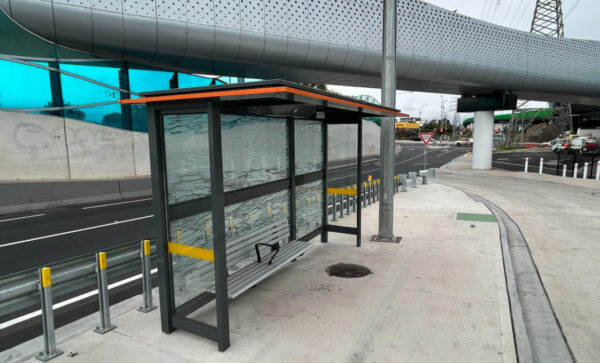
In Yarraville, Chris Edwards says one bus stop rebuilt in 2025 following the West Gate Tunnel works remains out of use, adding 40 minutes to his children’s school commute.
Despite contacting the Public Transport Ombudsman multiple times and being told the stop would reopen, he says it is still not operational.
In response to concerns about limited access in Melbourne’s west, The Department of Transport and Planning says improvements are underway.
“We will continue to improve the state’s bus network with more than 1900 weekly bus services added across seven routes in Melbourne’s West in 2025, and more new and improved bus services coming later this year,” a Department spokesperson says.
Community-driven solutions gain momentum
Amid rising fuel costs and ongoing transport gaps some residents are finding their own solutions.
Rob Piccolo is trying to make a change. As a Yarra Trams driver he says he saw firsthand how much patronage has increased with the free public transport.
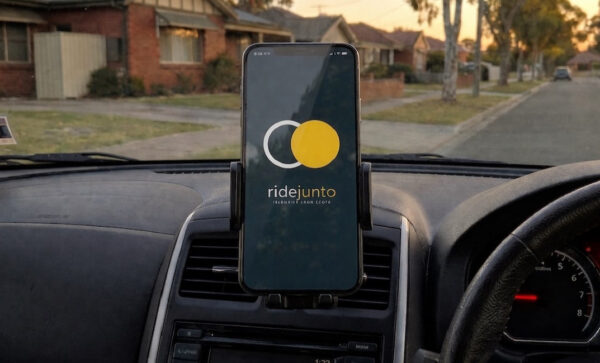
In response he and a friend have begun developing a community-based carpooling platform aimed for residents in the outer suburbs. Ridejunto will allow people travelling similar routes to share rides and split fuel costs.
“Public transport does not run 24-7 in some suburbs. I know this firsthand. My partner can’t get a bus to our suburb after certain times or before certain times and she is a shift worker as well. So it is for those sorts of people”.
Despite only recently launching the idea he says there’s been strong community interest with plans to roll out a pilot program in the coming weeks.
“We are just trying to find solutions for real problems for people. I think this crisis that is happening at the moment is the impetus to get this going.”
He says the app could bring a range of positive outcomes, from facilitating community, to easing cost of living pressures, and an improved ecological footprint. If the program is successful, he may expand the initiative to other areas.
“There are a lot of communities and areas that have this issue. So it is not just the West.”
Better Buses for the West calls for major overhaul of bus network
For four years, Elyse Cunningham has been advocating for bus reform through her campaign Better Buses for the West.
The group works closely with local communities to highlight how transport gaps affect daily life.
“So often those are people, especially if they do not drive, who do not have any ability to get where they need to go. Or a lot of the time, it’s parents who have children who go to schools in multiple areas. They are spending a lot of the hours of their day driving their kids around, which obviously takes up a lot of their time and has always taken up a lot of their money.”
Based on research by University of Melbourne academics, Cunningham developed the “West Bus Plan”. The plan encourages a faster, more frequent and interconnected grid by redistributing existing bus routes.
She says the project has been costed at $200 million over two years, significantly less than the $70 million currently spent on the bus network per month.
“You could have buses running every ten minutes every day across the Western suburbs. And this is something that could be done for a relatively low cost, especially compared to what the government is willing to invest in major road projects and other larger transport infrastructure projects.”
Xavier Menta, a volunteer for Sustainable Cities, is also a supporter of the West Bus Plan.
While he encourages free public transport, he says it only benefits communities with adequate services
“It is not as much of a win for us. I think it is just more of a headline that sounds good. Free public transport helps inner city and eastern folks a lot more than us Westies”.
When he was running as a candidate in both the federal election and state election in Werribee, he found that public transport was ‘one of their major talking points for the West’.
According to him, an upgraded transport network within the West will reduce the need to own a vehicle and in turn help ease ‘cost of living pressures’.
He hopes for buses that run more frequently across the day, plus a more interconnected bus network within the western area that does not always concentrate on trips to the city.
“I feel like public transport in Victoria, in Melbourne in particular, it is very much designed right now to get into the city and out of the city without real thought into just moving around more horizontally and vertically from where you actually live.”
Elyse Cunningham says some communities in the western suburbs do not have access to even a minimum of services.
“Most areas of the West are just public transport black holes … But then the closer you get into the city, you can see that the access gets better and better.”
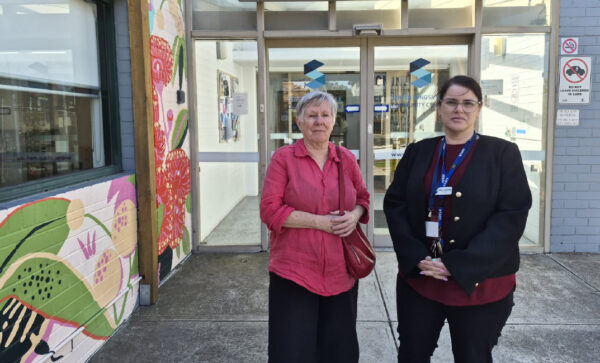
Even in the inner west, like South Kingsville, there are holes. Rosa Mckenna, President of community advocacy group Better West says buses do not run often enough and take routes that divert too much.
She says residents want more frequent buses and separate routes for separate areas.
“I think the focus is very much back on public transport. And we understand that we’re now very car dependent. And through poor policy, we’ve put ourselves in this position.”
Both Xavier Menta and Elyse Cunningham say communities feel ignored by the government, saying Labor takes Westies for granted because it has a ‘stronghold over the West’.
“Unfortunately, the West has been a safe Labor seat for 25 plus years. And with safety for the Labor politicians does come a degree of comfort that they do not have to make as many announcements to be able to win an election,” Menta says.
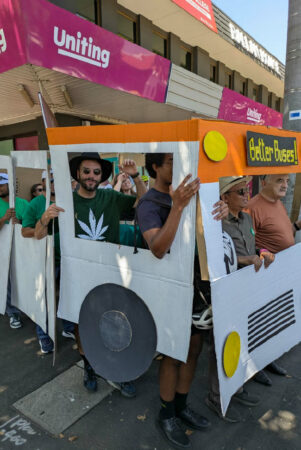
With an increasing number of independents focussing on local issues, and One Nation and the Liberal Party zoning in, they hope Labor will take more action.
They’ve been exploring voter sentiment in the West. “The results so far are showing that transport is one of the top three priorities for voters in the West this election”, says Cunningham.
She says it’s an equity issue as public transport black holes often correlate with areas where residents live on lower incomes with the fuel crisis making the situation worse.
“If the government does not do something now to fix services, it is only going to further entrench inequality in our city.”