By Jodie Gregson and Andrew Gilbert
Westside Wilderness Society Group
If you were to ask a Greater Glider or Leadbeater Possum or a Powerful Owl about their current housing security all three of these unique endangered animals would tell you that they are in an extremely vulnerable situation.
Their main problem is loss of their precious native forest habitat. These iconic and treasured Australian animals, found nowhere else on Earth, live in our old growth native forests. They nest and breed in the hollows that develop in the older trees. Their forest homes have greatly diminished over decades due to wildfires and logging for timber and wood pulp. These forests grow on the lands of Wurundjeri, Taungurang and Gunai Kurnai people.
Industrial logging in Victoria’s native forests officially ended on 1 January 2024. Does this mean native forest logging ended permanently? Well, most Victorians would say yes it has. However, legislation that enables logging remains in place. This means high conservation forests remain legally vulnerable. A future government could restart industrial-scale logging. Existing laws still allow forest product licences to be issued.
Currently, there is a crucial opportunity to permanently protect Victoria’s native state forests from industrial and commercial resource extraction with the Victorian Government’s drafting of a new Public Land Act. These forests are not only crucial for the survival of animals like the Greater Glider, Leadbeater’s Possum and Powerful Owl but also for biodiversity, climate stability, water security and community wellbeing.
Our local governments, like Hobsons Bay City Council, have their Urban Forest Strategy to manage climate change, urban heat and enhance biodiversity, which aims to increase the municipality’s tree canopy from 7.5% in 2020 to 30% by 2040. They look to the old growth forests as utopian examples of natural systems that are self-cooling water-absorbing prime housing for our magnificent array of unique flora and fauna.
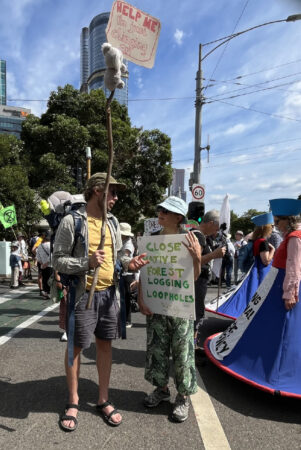
How ironic that these forests, ravaged for so long, are still only protected in a temporary way. The magnificent iconic Mountain Ash forests, home to the world’s tallest flowering plant, are on the doorsteps of Melbourne. Our cities and towns are being built up and out at an ever-increasing intensity to house our expanding population. Encroachment on preserved habitat for our native animals is a constant threat. When this is coupled with increasing wildfires, burn offs, fire breaks and agriculture, the need for strong permanent protection through the new Public Lands Act is vital.
Now is the time for Victorians to let our government know we expect our remaining native forests to be permanently protected for future generations and to house our endangered native species.