
By Marie Vakakis
When I was first allocated this article, I didn’t expect it to have any sort of personal story. I figured I’d watch the documentary and write something reflective about a denim and textiles factory in Yarraville.
Then I started doing a little bit of research. Turns out, my grandma, a Greek migrant to Australia, worked at that very factory for over a decade. Some of my aunties did too, along with other members of our community. That discovery shifted how I approached the whole thing. I felt more connected and genuinely excited to watch the film.
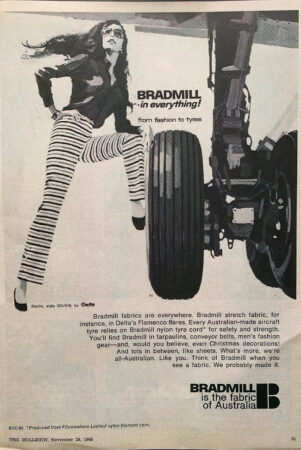
The documentary focuses on post-World War II migration and the experiences of migrant workers, especially those from Italian and Greek backgrounds. But it also reveals that over 30 languages and cultures were represented among the staff. It wasn’t just a workplace. It was a place where people from all over the world came together, where community was built and culture was carried forward.

I’ve spent most of my adult life living in Yarraville, just down the road from where my grandparents lived. The Bradmill factory was walking distance from their house. I grew up attending the local Greek church, going to the Greek market or church events, and eating loukoumades (Greek doughnuts) made by my yiayia (grandma). We were surrounded by multiculturalism. Just down the road we had a beautiful Vietnamese community. All of this shaped my love of food, language and connection. Watching the documentary helped me realise that some of this can be traced back to places like Bradmill, and the employment opportunities it offered to newly arrived migrants.
Back in the 60s and 70s, before Yarraville became the inner-west hub it is now, this little factory played a huge role. It helped shape the local culture, the economy, and people’s sense of identity. That is pretty amazing, when you think about it.
Going to the opening night of the documentary was something special. Seeing some of the former workers in the audience, watching their expressions as they saw themselves and their friends on screen, you could feel the pride in the room. For some of them, this may have been their equivalent of a graduation or school reunion. They might not have had those experiences elsewhere. But Bradmill was their community, their workplace, and in many ways, their family.
That really stayed with me.
I couldn’t help but think back to my own childhood memories. I remember going to the Sun Theatre before it was renovated. I once watched Ben-Hur there, and it felt like the longest movie ever on those old, uncomfortable seats. That theatre, the church, the factory, the food, the people, they all hold memories and meaning. They’re stitched into the story of this suburb, and into my own story too.
There’s something really special about Yarraville. Watching this documentary reminded me that history isn’t just in the big moments. It’s in the small ones too. In the laughter between colleagues, the food shared at break time, the languages spoken on the factory floor, and the pride that lasts long after the machines have stopped.
Bradmill might seem like just an old factory to some. But for many, including me, it’s a reminder of where we’ve come from and what it means to belong.
Marie Vakakis is a therapist and local resident.




The article doesn’t include the name of the film or where to watch it (although I’m guessing The Sun Theatre, as that is mentioned). It would be good to know what “the documentary” is!