By Dominique Hes
There’s a small hair salon in South Kingsville proving that small business decisions can create ripples of positive change throughout the community and beyond.
I recently interviewed Michelle Caridi, owner of Changing Heads salon after a friend insisted I discover the remarkable work Michelle’s been quietly doing. My daughter and I had been regular customers for years, but I hadn’t realised the great movement she is part of.
Michelle has spent 21 years building her business, but approximately 11 years ago, she made a pivotal decision to update her salon and implement ways to be more sustainable. This shift was partly inspired by meeting Paul Frasca, founder of Sustainable Salons, an organisation transforming how the beauty industry handles waste.
The journey began simply by going paperless by switching to iPads and eliminating unnecessary paper printouts. Then the salon started to reduce its impact on the environment by changing how the team separates waste, at the same time creating meaningful employment opportunities for disadvantaged people.
Every fortnight the salon puts out a dedicated sustainable salon bin filled with carefully sorted recycled materials. For example, cut hair doesn’t get thrown away, instead it is collected and donated to farmers who use it to enrich their crops thanks to the keratin it contains. If needed it can also be used in oil spills, by creating a product called Hair Booms, which are stockings full of hair cuttings. For longer hair, they are part of the Ponytail Club, where hair measuring 20 centimetres or longer is sent to the Variety charity, which crafts wigs for children dealing with alopecia or cancer.
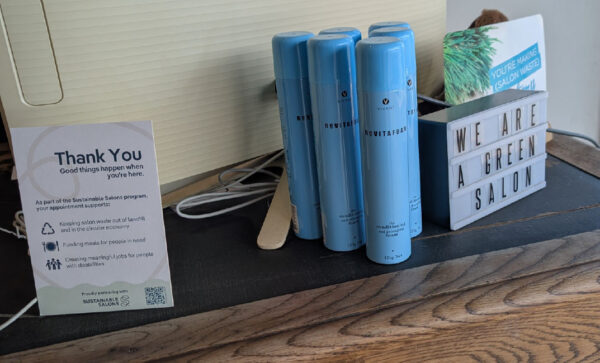
Also, the salon collects used foils from hair treatments and sends them to a specialist facility where technicians remove chemicals and extract the metal. That recovered metal is then sold to companies.
“But here’s the beautiful part,” says Michelle, “The profits are donated back to charities, including the local food bank.”
In a social contribution space, the sorting facilities deliberately hire people who face employment barriers; 35 per cent of the organisation’s staff are people with disabilities.
Since launching in 2015, Sustainable Salons have redirected over two tonnes from landfill, recycled 722,890kg of paper, sent 142kg of tools to e-waste, recycled over 650,000 kilograms of aluminium, contributed 114,264kg of hair for oil spill cleanups, donated almost 300,000 ponytails for wig creation, helped supply over 400,000 meals funded through recycling proceeds, and delivered 20,000 wheelie bins of materials for repurposing or recycling.
And by 2021, Changing Heads was one of 1,000 salons working together with 5,000 hairdressers reaching three million customers.
Michelle’s quiet revolution reminds us that sustainability isn’t about grand gestures; it’s about consistent choices, thoughtful partnerships, and the courage to do things differently. When local business owners like her lead, entire communities follow.