By Tamsyn Hogarth – Fly By Night Bat Clinic
In January, as temperatures across Melbourne surged well beyond what any living being can safely endure, the Grey Headed flying fox camp at Brimbank Park fell silent.
For volunteers on the ground, this was not an abstract climate statistic nor a distant environmental headline. It was a visceral, confronting reality. Entire sections of the camp were strewn with lifeless bodies. Mothers lay dead with pups still clinging to them. Others crawled desperately along the ground, disoriented and dying from heat stress. Many did not survive long enough for help to reach them.
Flying foxes are particularly vulnerable to extreme heat. Once temperatures exceed the low 40s, their ability to thermoregulate collapses. What unfolded at Brimbank Park was a mass mortality event, not unprecedented, but deeply alarming in both scale and frequency. The grey-headed flying fox, already listed as vulnerable to extinction, continues to be pushed closer to the edge.
What is often unseen in these moments is the human cost, borne almost entirely by volunteers.
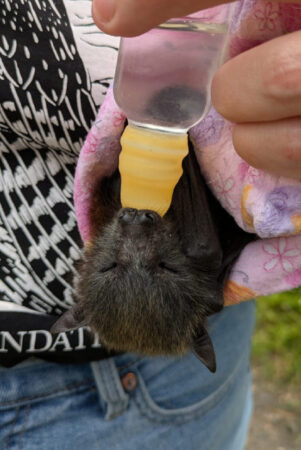
Wildlife rescue in Victoria relies heavily on unpaid, highly trained carers and rescuers. During the Brimbank Park event, volunteers responded while enduring the same extreme heat conditions as the animals they were trying to save. Many worked long hours in temperatures exceeding 40 degrees, wearing protective gear, navigating distressed members of the public, and making rapid triage decisions with limited resources.
These were not easy rescues. Volunteers were forced to assess whether animals could be saved. They retrieved orphaned pups from the bodies of deceased mothers, knowing that many would require months of intensive, around-the-clock care, if they survived at all. Volunteers returned home physically exhausted and emotionally overwhelmed.
The trauma of these events does not end when the heat subsides. Volunteers carry the images with them: the sounds, the smells, the sense of helplessness when the scale of suffering outpaces the capacity to respond. Many are juggling this work alongside full-time jobs, families, and their own health, with little formal support or recognition.
Despite this, volunteers continue to show up. Not because it is easy but because the alternative is leaving animals to suffer alone.
As climate extremes become more frequent, these events will no longer be rare. They will become part of a grim pattern. Without coordinated planning, proper resourcing, and meaningful support for both wildlife and the people who care for them, the burden will continue to fall on volunteers already stretched to their limits.
The community can play a vital role in helping carry this load. Financial donations help cover the real costs of rescue and rehabilitation, specialised formula for orphaned pups, veterinary care, transport, and protective equipment for volunteers working in hazardous conditions. Just as importantly, people can support this work by reaching out to ask what is needed, sharing accurate information, and respecting safety advice around wildlife.
For those able to commit, volunteering , whether through hands-on wildlife care, logistical support, or behind-the-scenes assistance, helps ensure we can respond when the next extreme event occurs. Every contribution, large or small, strengthens the network that stands ready when animals have nowhere else to turn.
The deaths at Brimbank Park were not just a tragedy for flying foxes. They were a warning, about the cost of inaction, and about how much we currently ask of volunteers to absorb the consequences of a warming world.
If we value our wildlife, we must also value and support the people who stand between them and the worst impacts of a changing climate.