By Anna Donne – Sunshine and District Historical Society
What’s the story behind the name? Are there deer in Deer Park? No, not as far as we know. But there used to be.
In 1885, the Melbourne Hunt Club, unable to remain in Caulfield, relocated to what was then the area of Kororoit, bringing with them a stock of game deer to use in their hunting exploits. The name Kororoit is from the Woiwurrung language, of the Indigenous Wurundjeri people of the Kulin Nation, who have lived in this area for many thousands of years.
In 1885 Kororoit was a quiet, rural area, with no factories and few houses. The Melbourne Hunt Club leased 300 acres near Ballarat Road and set up their deer hunting grounds.
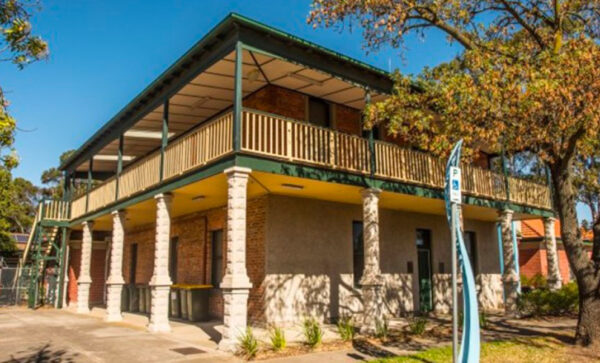
In 1886, to support their members, the Melbourne Hunt Club built the Hunt Club Hotel on the site of the burnt-out ruins of a previous hotel on Ballarat Road. This building remains today, although it has seen quite a few changes in both owner and purpose since those early days. It remains one of the few 19th century buildings in the area. The Hunt Club Hotel continued operating until 1911 when the building was converted to a private residence.
In 1889, in one of the most obvious name changes, Kororoit was renamed Deer Park, because, well, it used to be a park. For deer.
Meanwhile the area now known as Deer Park was also undergoing changes. The discovery of gold in Ballarat and Bendigo prompted a huge demand for explosives and Deer Park was chosen as the site of Melbourne’s first explosives factory. At the time Deer Park was quite isolated and a long way from the outskirts of Melbourne. The availability of water from the nearby Kororoit Creek was also a factor.
This first explosives factory was originally built by the Jones, Scott & Co Company. It was taken over by Nobel in 1897 and later renamed Imperial Chemical Industries of Australia and New Zealand (ICIANZ) in 1928. The company went on to become Orica and still operates today.
The factory produced chemicals and explosives for the mining industry and became one of the largest explosive, chemical and plastics manufacturers in Australia. It also contributed to wartime production in ammunition and defence explosives during World War Two.
As industry arrived, so too did workers. The explosives factory constructed workers’ cottages turning the former rural village into a substantial industrial area. This industry driven approach continued post World War Two, resulting in a boom in housing in Deer Park.
ICIANZ expanded its activities into leathercloth, dye materials and plastic moulding powders and resins, and by the early 1950s, ICIANZ had a workforce of over 2,500.
The Hunt Club Hotel also underwent significant changes. In 1921, ICIANZ purchased the building for use as accommodation for unmarried men working in its factories. It then became a recreation club for ICIANZ workers, and a sports oval was established alongside the building. The sports oval remains in use today.
In 1982 the building was bought by the City of Sunshine and opened as the Hunt Club Community and Arts Centre. The Sunshine and District Historical Society also operates out of a small cottage at the rear of the building.
Deer Park is very different from those early days. Deer and hunters are long gone and although the factory remains, Kororoit Creek now boasts peaceful reserves and numerous walking trails. The Hunt Club Hotel is a thriving community centre that offers classes, art exhibitions and community meeting spaces.
So next time you are heading to Deer Park for a bowl of Laksa or a gluten-free treat, check out the amazing Hunt Club building. It’s located alongside John McLeod reserve and offers a fascinating glimpse into the history of this ever-evolving suburb.