By Dominique Hes
You may have noticed the term ‘20-minute city’ (sometimes even a 15-minute city) appearing in the news recently, often surrounded by a lot of confusion and, sometimes, alarmist claims. Depending on the source, it is either portrayed as a planning solution for happier, healthier neighbourhoods, or as some sort of plot to restrict freedom and control where people can go. Really, the idea is much simpler and far less sinister than some of the headlines suggest.
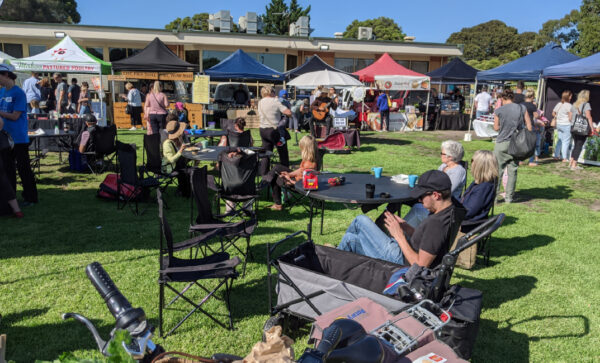
A great example of a 20 minute city which already exists is Yarraville. You walk or ride to public transport, the shops, schools, medical centres, parks, cafes, community spaces, and even some workplaces, all within a 20 minute reach. Though Yarraville is the poster child, you can see it in Williamstown, South Kingsville/Spotswood, Point Cook, etc. In the old days we used to call them villages.
At its heart, a 20-minute city, or 20-minute neighbourhood, is a planning concept designed to make daily life easier by bringing essential services closer to home. The concept is already part of Plan Melbourne 2017–2050, which aims to create a more liveable, connected, and sustainable city. It is not about confining people to their suburbs or restricting car travel – it is about providing choice and convenience.
Much of the recent negative press has come from misunderstandings and misinformation. There have been claims online that the 20-minute city is part of a ‘climate lockdown’ or that residents will be fined for leaving their local area. This can be triggering for us in Melbourne after our long, long lockdowns during Covid-19 so people are right to ask questions and find out more.
So let me be REALLY clear, this negative press is NOT true.
The concept does not involve surveillance, fines, or restricting movement. Some of the confusion stems from traffic management experiments in other countries, such as low-traffic neighbourhoods, but these are local measures and not an inherent part of the 20-minute city concept.
That said, there are practical challenges that planners acknowledge. While inner and middle-ring suburbs like Footscray or Yarraville already have many of the ingredients for a 20-minute neighbourhood, outer suburbs and regional areas often lack the density or infrastructure to make it fully work. Implementing the concept in these areas may require staged development, local hubs (and pubs!), better public transport, or a careful mix of housing and services. These challenges do not make the concept flawed, but they do highlight the need for tailored approaches rather than a one-size-fits-all model.
The potential benefits of a 20-minute city are significant. Reducing travel distances helps cut time spent in traffic, lowers emissions, and encourages walking and cycling, which improves health. Having services nearby strengthens local communities, supports small businesses, and makes neighbourhoods feel more vibrant. It also increases resilience, as communities with nearby amenities are better able to cope with disruptions such as public transport strikes or other emergencies.
Importantly, a 20-minute city is not about eliminating cars or forcing people to stay within a particular area. It is about designing neighbourhoods that allow people the option to live more locally if they wish, without taking freedoms away. In short, it is a principle for better planning making it easier to meet daily needs, connect with neighbours, and enjoy a safer, more pleasant environment.
The backlash against the idea has largely been driven by misconceptions, but the practical value of well-planned 20-minute neighbourhoods is clear. For many residents, the chance to spend less time commuting, have essential services close by, and enjoy more walkable streets is appealing. The 20-minute city is not a threat; it is an opportunity to bring life closer to home, improve local communities, and create a more sustainable and enjoyable city for everyone.
Lastly, as we move to a world where things could go downhill quickly, we want to build community, connect locally, and build local services and opportunities. Irrespective of the planners, the government, or big business, we can all start building our own 15/20 minute cities, together with our neighbours and friends.