By Shreyas Anand
For centuries women have been subjected to suppression and patriarchy. While feminist movements over the last hundred years or so have led to some improvements, there’s a lot more still to be done. It’s these issues that fuel local artist and psychologist Terri Russell Barker.
Working across multiple media: drawing, painting, and sculpting, Terri focuses on exploring deeply feminist themes.
She grew up in the then-harsh conditions of the western suburbs, and developed an interest in art from an early age, so went on to study Visual Communications at RMIT, marking her first move out of the west.
“There was a part of me that felt like I needed to get out of the West… the West is kind of a tough place to grow up in; I wanted something more,” she says.
After working as a visual artist for multiple corporations and agencies she says she became disconnected from her own creativity leading to a six-month break from work to refocus on her art practice.
She also returned to the West where she has now settled, but she says she was greeted by a different West; indistinguishable, gentrified, lighter and more open.
Terri says art is a part of her identity and has come to understand the importance of authenticity and being true to herself; letting go of the fear of being judged, which has led to her taking an interest in sculpture – as well as photography and video – allowing her to become the ‘full version’ of herself.
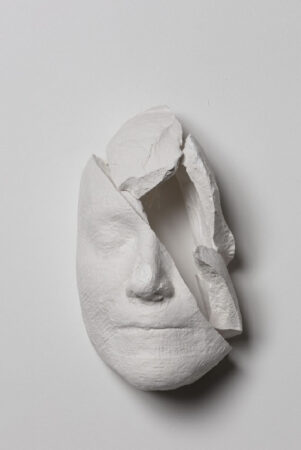
She recently held her first solo exhibition, Rage Be Comes Her, and while the common thread in all her art is ‘experience of being human’, this exhibition explored female anger, feminism, and the systemic suppression of women.
It was inspired by her own anger, and one of her sculptures, a ‘head in a rock’, represents “the feeling of being constrained, contained but also intensely engaged”.
Informed by her knowledge of psychology and anger, these feelings led Terri to film a cathartic video titled RAGE EVENT #1 in which she releases anger by throwing rocks at clay models of her face.
In a chat with Ilona Nelson, host of The Artier Side on the Westside Radio, Terri calls out the normalisation of penalising women for being angry, exploiting them by forcing them to block off a natural human trait and connection to their body.
“There’s a lot going on in this world that we’ve got [a] good right to be angry about, and we need to feel that it’s okay to be angry, and it’s okay to say so,” she says, pointing out that suppressing anger leads to negative effects on mental health, commonly anxiety and depression.
“We need to listen to what our bodies say,” Terri says, adding that women and girls need to be encouraged to express their feelings and speak up with confidence to say things like ‘Stop!’ ‘No!’ ‘Don’t touch me!’ ‘I just said that!’.
Change is only possible she says through ‘female responsibility’ and being in powerful positions, and she encourages women to communicate their problems through applying pressure.
“As Antonio Guiteras once said,” she says, “power is not usually given; power must be taken”.
You can view some of Terri’s art here errirussellbarker.com
You can view RAGE EVENT #1 HERE terrirussellbarker.com/work/rage-event-no-1
And for more conversations with creatives from the West tune into The Artier Side on Westsider Radio on the last Thursday of every month at 10am and 7pm.