By Jeremy Boland
Residents of Melbourne’s west are remembering the life and artistic contributions of Italian-born artist Giuseppe ‘Pino’ Calati, a creative figure whose work helped enrich the cultural life of St Albans and the surrounding suburbs. Born in Italy in 1916, Calati later made Australia his home and became known as both a painter and sculptor, working in Italy and Victoria after arriving in Australia in the post-war years.
His story sits within a wider history of change in Melbourne’s west. After the Second World War, St Albans grew rapidly as European refugees and migrants settled in the area, many seeking affordable land, work and the chance to build more secure lives. A once-small farming settlement became a fast-growing suburb of new houses, workshops, schools, churches, sporting clubs and community organisations.
Calati’s artworks reflect that environment. Pieces such as his acrylic work associated with the ‘Roadside Drain’ speak to the local streetscapes, edges and practical infrastructure of the western suburbs: places where paddocks, industry and new housing met. In St Albans, Sunshine, Deer Park and neighbouring areas, these were not abstract themes but part of daily life for families establishing themselves in a new country. His attention to ordinary scenes gave dignity to the suburban landscape and recognised the beauty in places often overlooked.
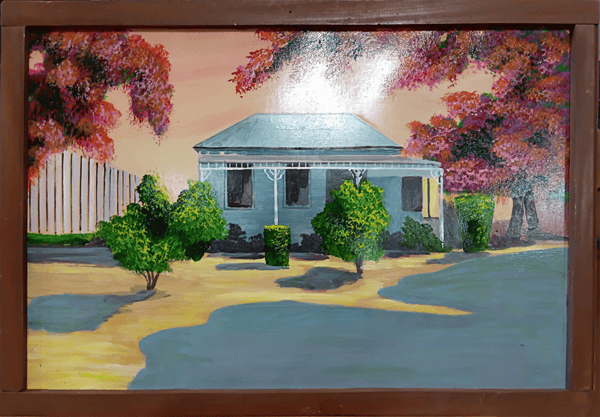
As an Italian-Australian artist, Calati’s practice also resonates with the experience of many migrants who came to Melbourne’s west during the twentieth century. For those communities, art could carry memory, language, faith, labour and belonging across continents. Calati’s painting and sculpture connected the traditions of his birthplace with the realities of suburban Victoria, expressing both the disruption of migration and the creativity required to make a home in unfamiliar surroundings.
Community members who knew of his work describe him as an artist whose creations brought colour, inspiration and a sense of identity to the growing communities of Melbourne’s west. His contribution forms part of the rich multicultural story that shaped the region over many decades, alongside the efforts of migrant families who worked, built homes, raised children and created clubs and associations that gave the suburbs their distinctive character.
Today, Calati’s artworks continue to be appreciated by those who value local history and artistic expression. They are important not simply because they were made by a skilled artist, but because they help tell a local story: how migrants and their descendants transformed Melbourne’s west from a fringe district into a place of cultural energy, resilience and shared memory.
The artworks by Giuseppe ‘Pino’ Calati currently held by the St Albans Youth Club are to be formally handed over to the Brimbank community, ensuring that these important pieces remain accessible and preserved as part of the area’s shared cultural heritage. The pieces were restored through the Robert Cripps Institute for Cultural Conservation, supporting their long-term care and public appreciation.