By Sandra Wilson
As we become more aware of the massive new data centres emerging in the West, the old and familiar Altona industrial landscape is soon to change forever.
Qenos on Kororoit Creek Road, Australia’s only polyethylene (plastic) manufacturer, and the Mobil oil refinery further east, are getting ready to dismantle industrial infrastructure that has been significant on the skyline for decades. The dominating pipes and stacks have been captured in many a family photograph or local artwork, symbolic of the suburb and the west of Melbourne.
During my eight years as a Hobsons Bay councillor, I was chair of the Altona Complex Neighbourhood Consultative Group, the chemical complex-to-community accountability forum, so late last year I called up one of the safety engineers at Qenos to find out why there had been so little media coverage of the business and site closure. I had heard rumours and was curious about Altona’s industrial heritage being preserved because it just might matter in the future.
When Toyota announced in 2014 that its half-century of automotive manufacturing in Altona would cease, there was a media frenzy about the loss of employment and supply-chain business across the west. A government taskforce was established to deal with the fallout. Similarly, in 2021 when Mobil announced it would finish refining oil, becoming fuel import and storage only, it was headline news. And when BAE in Williamstown was excluded from tendering for Federal shipbuilding contracts, the impacts on a local heritage industry were submitted to a Senate Inquiry. The Qenos demise and demolition has not received quite the same level of attention.
Qenos began its life as the Altona Petrochemical Company (APC) in 1961; Mobil, soon to be an industrial octogenarian, established its presence in 1946. Their industrial silhouettes have been the backdrop to generations of Westies, and while many local residents will welcome the end of these industrial operations, the imminent dismantling will see that dramatic skyline vanish, and Altona’s industrial landscape changed forever.
As a result of my phone call and subsequent emails to the new Qenos site owner, ESR, who will transform the site to warehousing, we have established a community partnership salvaging historical pictures and documents that might otherwise have been trashed. These records, albeit vestiges of the fossil fuel industry, will be digitised so that some local history of big, often described “dirty” industry, can be saved for future reference.
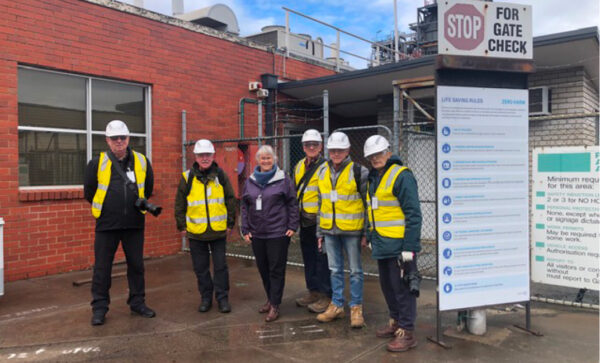
Another part of this community partnership has been granting the Hobsons Bay Men’s Shed Photography Group access to Qenos on Maidstone Street to capture final pictures of the tangle of industrial infrastructure in pre-demolition state. Perhaps Mobil would welcome a similar visit. These photographs will hopefully form part of a public exhibition that will invite community to bring forth other documentary and personal memories of Altona’s industrial change and heritage. For interest or contribution as we mark this change, contact Sandra Wilson via LinkedIn.