By Borderlands/New Community
From migrant women struggling with Melbourne’s extreme weather swings to asylum seekers whose voices are missing from the services meant to help them, grassroots community workers across Melbourne’s west are tackling problems that government agencies and professionals often miss entirely.
These real-world challenges—and the innovative community-led solutions emerging in response—will take centre stage at the Community Development Conference in Footscray this mid-October, featuring more than 50 presentations from across Australia and internationally. After a 20-year gap since Melbourne last hosted such a gathering, organisers hope this will mark the revival of a vital Victorian tradition.
Two local presenters exemplify how community development puts lived experience at the heart of social change, revealing how the most effective solutions often come from those closest to the problems.
When weather becomes a mental health crisis
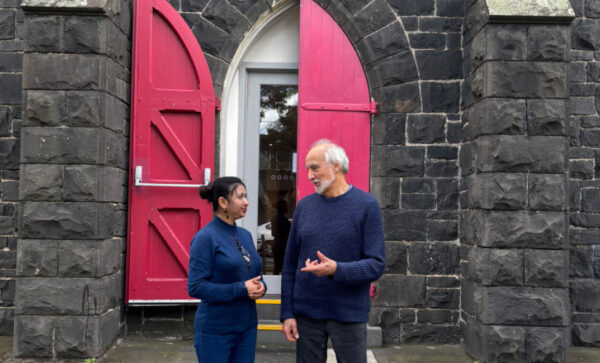
Dr. Karisma Amjad arrived in Maribyrnong two years ago thinking she understood migration challenges. After all, she had just completed her doctorate at a Bangladeshi university, researching the mental health impacts on women forced to relocate to urban slums in her home country’s capital. But Melbourne’s notoriously unpredictable weather blindsided her in ways her academic research hadn’t prepared her for.
“The weather of Bangladesh is mostly humid and mostly predictable, with a monsoon and the short, still, rather mild winter,” Amjad explains. “We don’t really need to wear warm clothes in winter, but arriving here, I faced difficulties in what I experienced as extreme weather changes in summer and winter.”
What began as personal discomfort quickly revealed itself as a broader community health crisis. Through connections at Borderlands, Amjad met other Bangladeshi women experiencing similar struggles—but their challenges went far deeper than simply adapting to new clothing requirements.
“They told me they feel anxious and vulnerable during extreme weather episodes,” she discovered. “They don’t know how to get support from government or Council, especially feeling anxious and helpless which then led to further mental health issues.”
The women reported a cascade of health problems directly linked to Melbourne’s weather volatility. During scorching summer periods, they suffered headaches, dizziness, and skin irritations. The spring pollen season brought allergies like hay fever—reactions their bodies had never experienced in Bangladesh. Winter proved equally challenging, with colds, fevers, and nosebleeds caused by indoor heating systems that dried their nasal passages and respiratory systems.
But perhaps most troubling was the psychological impact. “And they feel too often alone, embarrassed and stressed and anxious especially when their children come home with health conditions they don’t really understand how to prevent,” Amjad notes.
The cultural dimension of these struggles became clear through her research. “In Bangladesh, they live more collective lives and know culturally-rooted strategies. But here, culture is very individualistic, and they can’t use the life strategies they have known and practiced in Bangladesh.”
Melbourne’s unpredictability—the city’s famous “four seasons in one day”—prevents proper preparation. Unlike Bangladesh’s reliable seasonal patterns, Melbourne women never know if they’ll face a 15-degree morning followed by a 30-degree afternoon, leaving them constantly caught off-guard.
Amjad’s conference presentation will outline her community development approach: “to do some initial research and talk about some coping strategies with the Bangladeshi women who are usually rather introverted and avoid mixing with other people.” Her work represents a shift from individual adaptation to collective community support—recreating some of the communal resilience these women knew in Bangladesh within Melbourne’s individualistic framework.
Amplifying asylum seeker voices
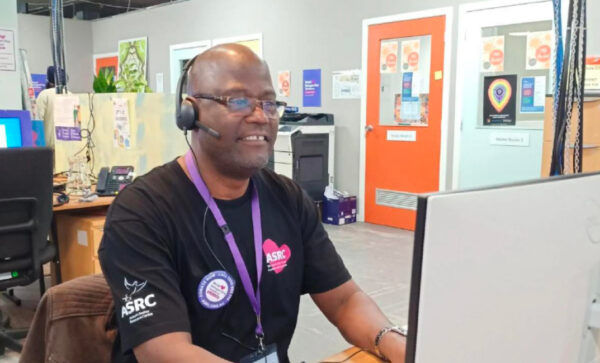
Yonas Dare has spent over 15 years learning a parallel lesson about the power of lived experience. He’s the monitoring and evaluation lead at the Asylum Seeker Resource Centre with extensive international experience in humanitarian and development programs—from emergency response to public health and empowerment initiatives. This has taught him that the most crucial insights often come from those who’ve walked the path themselves.
“People with lived experience of seeking asylum can identify gaps and inefficiencies in the service delivery that are not visible to professionals,” Dare explains. With dual master’s degrees and experience spanning continents, he could easily position himself as the traditional expert. Instead, his work focuses on fundamentally restructuring that dynamic.
“As well, it’s really important to offer services in partnership between professionals and people with lived experience; it’s important to move away from a ‘top-down’ expert position as those with lived experience of what they went through […] have real expertise of such situations and of what it sometimes takes to (not) be understood.”
Dare’s presentation will share concrete examples of how this partnership model transforms service delivery. His work demonstrates that those seeking asylum don’t just need services—they need to help design and evaluate those services.
This approach challenges fundamental assumptions about professional expertise. While Dare brings technical skills in program design, data analysis, and evaluation, he’s learned that people with lived experience possess irreplaceable knowledge about what actually works, what creates barriers, and what gets lost in translation between policy and practice.
His presentation will include extensive research gathered at the ASRC, including material from comprehensive literature searches, but the real power lies in the voices and insights of people seeking asylum themselves.
A conference two decades in the making
These stories represent just two threads in what has become a remarkably comprehensive program addressing community development across Victoria and beyond. The conference program, available at regeneratingcommunities.net, showcases the breadth of challenges communities are tackling through participatory, bottom-up approaches.
Environmental and health issues feature prominently, alongside political and citizen participation initiatives, arts and creativity projects, and multifaceted strategies for combating social exclusion. Many presentations weave together practical action with deeper reflection on community development values, theories, methods, and approaches.
Jacques Boulet, project worker at Borderlands and General Editor of New Community, sees this broad approach as evidence of community development’s unique potential. “The program will offer glimpses of the potential that the Community Development philosophy and approach has to generate and sustain participatory, ‘bottom-up’ and inclusive social and ecological change and what it can contribute to communities, groups and individuals when responding to the many challenges we presently face locally, state-wide and globally.”
With about ten presentations from Melbourne’s west alone, metropolitan contributions are well-represented alongside regional and rural Victorian projects, interstate initiatives from NSW and Queensland, and international project experiences. This geographic spread promises “an exciting diverse panorama of how we could ‘regenerate communities,’” according to Boulet.
The timing feels particularly significant. As communities grapple with climate change, social inequality, political polarisation, and the ongoing impacts of recent global disruptions, community development offers an alternative to top-down solutions that often fail to address root causes or sustain long-term change.
“We certainly hope that the enthusiasm of the response to our conference indicates a desire to ‘regenerate and develop communities’ both for personal wellbeing and towards the development of a more just, vibrant and inclusive society,” Boulet reflects.
Building lasting networks
The conference organisers have structured the event not just as a series of presentations but as an opportunity to strengthen networks among community development practitioners. With discussions, workshops, plenaries, and structured sharing opportunities, participants will have multiple chances to connect their work with others facing similar challenges.
The New Community journal, Australia’s only publication fully dedicated to community development, will invite presenters to contribute articles following the conference. Published in some form since 1983 with only a brief interruption in 2000, the journal restarted in 2003 through the Borderlands Cooperative and represents a crucial resource for documenting and sharing community development innovations.
Supporting this knowledge-sharing mission, the local Chestnut Tree bookshop will offer a 5% discount on a curated list of books focusing on Australian community development work and contextual issues central to many conference discussions.
For organisers, this conference represents more than a single event—it’s an attempt to rebuild a tradition that lapsed when the last Melbourne community development conference took place nearly two decades ago. “Given that it has been almost 20 years since the last Community Development conference took place in Melbourne, the organisers hope that our conference will be the start of a lasting Victorian tradition,” Boulet notes.
The choice of Footscray as the venue reflects community development principles perfectly. Rather than holding the conference in a sterile conference centre, participants will gather at the Borderlands Cooperative—a space that embodies the values being discussed, where community development happens daily through real relationships and ongoing commitment to local change.
The convergence of stories like Karisma’s weather-focused community research and Yonas’s lived experience advocacy suggests this conference will do more than share information—it will demonstrate how community development transforms both communities and the people working within them, one conversation, one connection, one community solution at a time.