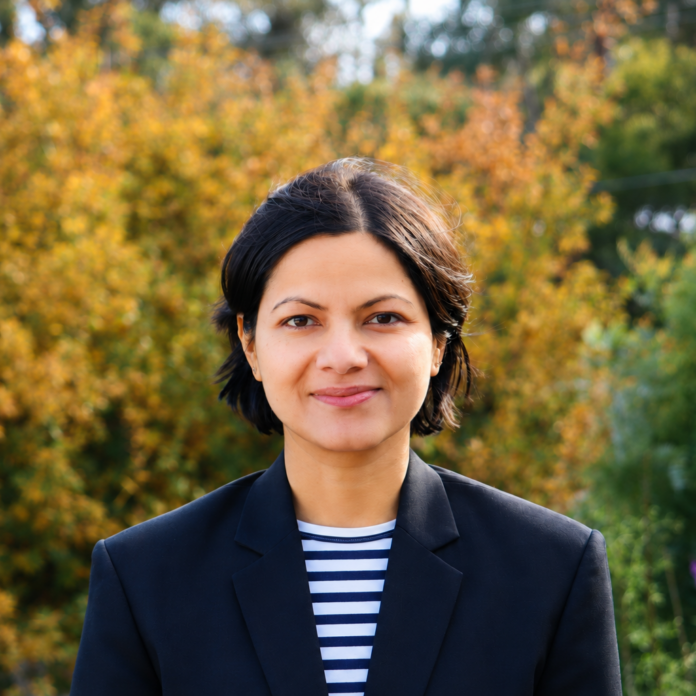
Vasundhara Kandpal
Question 1: Are you aligned with any political parties (for independents) and to where are your preferences going?
Because all the candidates that will ultimately run in my electorate have not been announced, we have not yet finalised our preferences.
Question 2: What is your position on data centres in the western suburbs? Do you think there should be a moratorium? Should they be independently powered by wind, solar, coal, or nuclear?
I believe data centres have a role to play in our digital future, but their development must not come at the expense of local communities, the environment, animal habitat, or Victoria’s energy and water security. Large-scale data centres in Melbourne’s western suburbs raises legitimate concerns about electricity consumption, water use, emissions, land availability and the impact on surrounding communities.
There should be an independent assessment, transparency and genuine community consultation before any decision is taken on data centers. Yes, I would support a temporary moratorium on new large-scale data centre approvals until the local community is genuinely consulted.
I would advocate for the following requirements:
1. Renewable Energy: Data centres must fully offset their electricity use by investing in new, additional renewable generation and firming. They must also register as market participants, provide demand flexibility during periods of grid stress, and report transparently on their energy use and emissions.
2. No burden on communities: Developers must demonstrate that their energy requirements will not compromise grid reliability or increase electricity costs for households and local businesses. Companies that own these data centres must pay their full share of grid connection and network costs so that these costs are not passed on to households and businesses.
3. Responsible water use: Independent assessments must establish water requirements, prioritise recycled water and efficient cooling technologies, and protect local drinking water supplies and waterways.
4. Appropriate locations: Data centres must not displace land needed for housing, green spaces or essential community infrastructure. Noise, air pollution, backup generators, fuel storage and emergency management risks must be assessed.
5. Community consultation and accountability: Residents must have access to information and a genuine opportunity to participate in planning decisions.
My position is simple: The western suburbs deserve responsible development, not to become a dumping ground for resource-intensive infrastructure.
Question 3: How will you improve public transport options in the west?
1. Better bus services and interchange facilities: Increase service frequency, extend operating hours, including evenings and weekends, and improve connections between suburbs, train stations, schools, hospitals and supermarkets.
2. New transport infrastructure: Push for the long-awaited Mt Atkinson train station and better rail connectivity to keep pace with the west’s rapidly growing population.
3. Safer public transport: Advocate for accessible infrastructure, better safety measures and improved pedestrian and cycling connections.
4. Plan transport alongside housing: New residential developments are very disconnected currently. Public transport infrastructure should prioritise connecting communities to amenities at the onset of the development.
My vision: People in the west deserve the same quality of public transport as people in established suburbs.
Question 4: What will you do to reduce air pollution in the western suburbs?
Industrial activity, heavy vehicles, freight transport and poorly planned development are the main reasons for the disproportionate burden of air pollution in Melbourne’s western suburbs. If elected, I would push for a stronger, coordinated approach to improving air quality in the west.
My priorities would be:
1. Promote planned development to ensure there are green buffer areas between the commercial and residential zones.
2. Protect green spaces: Advocate for more trees, urban forests and green corridors to improve local environments, reduce urban heat and support healthier communities.
3. Stronger industrial pollution monitoring and controls: Advocate for tighter regular monitoring of emissions standards, strict enforcement against industries that breach environmental regulations.
4. Cleaner transport: Support better public transport, investment in electric buses and cleaner freight options to reduce vehicle emissions and reliance on private cars.
5. Community health and accountability: I will demand stronger environmental oversight and meaningful consultation with communities affected by industrial pollution.
Question 5: How do you propose to deal with homelessness and housing affordability in the West?
If elected, I would advocate for a practical approach that addresses both the causes and consequences of housing insecurity. I would work with local councils, community housing providers and not-for-profit organisations to identify local housing needs and ensure government investment reaches the communities that need it most.
My priorities would be:
1. Push for greater investment in social and community housing. I will push for reforms that will make housing accessible to people on low and modest incomes, not just those who can afford market prices.
2. I am a stronger believer in prevention than in crisis management. I will strengthen early intervention and support for people at risk of eviction, financial hardship, family violence and housing insecurity. I am currently working in a Prevention organisation and will aim to build stronger communities through prevention programs.
3. I will advocate for more funding in outreach services, mental health support and pathways into long-term, secure housing.
4. Protect renters: Advocate for stronger renter protections, fairer rental conditions and better support for tenants facing unreasonable rent increases or eviction.
5. Support vulnerable groups: Pay particular attention to women escaping family violence, older people, young people, people with disabilities and migrant families who may face additional barriers to secure housing.
Question 6: What is your policy on abortion?
I support a woman’s right to choose. I believe decisions about pregnancy and abortion must remain with the woman and there shouldn’t be any political, religious or social interference. No woman should be forced to continue a pregnancy against her will or made to feel ashamed or judged for her decision.
If elected, I would advocate for:
1. Protecting reproductive rights: Safeguard existing abortion rights and oppose any attempt to restrict access or criminalise women seeking abortion care.
2. Affordable abortion services: Work towards free medical and surgical abortion services so financial circumstances do not determine a woman’s choices.
3. Accessible healthcare: Expand publicly funded abortion services.
4. Professional counselling: Ensure access to accurate, non-judgemental information on reproductive health and contraception.
5. Removing barriers: Improve access to trained healthcare providers, timely referrals and culturally appropriate services, including for migrant and vulnerable women.
My position is clear: reproductive autonomy is a fundamental part of women’s rights, dignity and equality. Abortion is healthcare, and access to it must be safe, legal and affordable.
Question 7: What should be done to combat crime?
I will advocate for:
1. Prevention and early intervention. Community safety is achieved when fewer crimes are committed, not when more people are locked up. I will push for investment in early intervention programs, youth programs, stable housing, mental health support, family violence services, and job training and local economic development. I will also push for school re-engagement, because disconnection from education is one of the strongest predictors of youth offending.
2. Evidence-based justice settings. Policy should be built on evidence. Longer sentences have not been shown to deter crime, and mandatory minimums that remove judicial discretion are a blunt instrument. I will support sentencing guidance that keeps courts able to consider each person’s circumstances, and I will oppose treating children as adults.
3. A fair and well-resourced court system. Court delays hurt victims and accused people alike. I will advocate for properly resourcing courts, prosecutors and legal services so cases are heard in a timely way, and for protecting fair legal representation and the right to appeal.
4. Rehabilitation and reducing reoffending. Rehabilitation is the most effective way to reduce reoffending. I will support education and vocational training in custody, bail and parole assistance, and re-entry support including counselling, housing and employment, so people can return to the community safely.
5. Equity and accountability. First Nations people and other over-policed communities are over-represented in the justice system. I will advocate for community-led and culturally appropriate programs, for First Nations self-determination in justice policy, and for independent oversight of police.