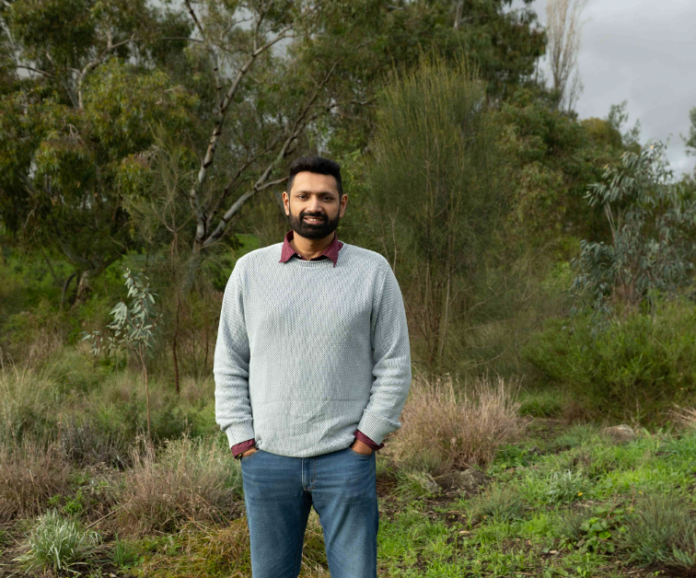
Tushar Kumar

Tushar Kumar is a long-term resident of Melbourne’s west and a technology leader with more than 22 years of experience across IT, banking and transformation. He has lived in Melbourne for more than a decade and is a father of two young children.

Tushar holds an Engineering degree from BIT Mesra and an MBA from IIM Bangalore. He has worked in senior technology and management roles, including at ANZ, where he has led teams and complex technology and regulatory transformation programs.

Beyond his professional career, Tushar has been actively involved in the community. He has served as a Victorian State Councillor with the Australia Speak Easy Association, worked as an ambassador for the “Racism. It Stops With Me” campaign, and participated in multicultural, arts and community initiatives across Melbourne.

Tushar believes Werribee and Melbourne’s west deserve the same level of investment, services and opportunities as the rest of Melbourne. His priorities include better public transport, safer and more connected communities, quality education, affordable housing, support for local businesses, better health services and responsible development.

His approach is based on listening to residents, using evidence to make decisions and working constructively across the community.

Question 1: Are you aligned with any political parties (for independents) and to where are your preferences going?

I am the Victorian Greens candidate for Werribee, so my political alignment is with the Greens.

My focus is on representing the people of Werribee and advocating for the issues that matter locally.

I will make decisions based on Greens policies, evidence and the interests of the community. For preferences, I will follow the Greens’ preference arrangements and the applicable electoral process rather than making a personal commitment outside that process.

Question 2: What is your position on data centres in the western suburbs? Do you think there should be a moratorium? Should they be independently powered by wind, solar, coal, or nuclear?

Data centres are an important part of the digital economy, but their development must not come at the expense of local communities, water security, energy reliability or the environment.

I support a precautionary, evidence-based approach to new data centres in Melbourne’s west. Before approving further large-scale developments, we need transparent assessment of their cumulative impact on electricity, water, land, noise, traffic, emissions and surrounding communities.

I support strong planning controls, community consultation, independent environmental assessment and full transparency around water and energy use.

New data centres should be required to use renewable energy and demonstrate additional clean-energy capacity rather than increasing pressure on existing electricity supplies. Water-efficient cooling and recycled or non-potable water should be prioritised.

The Victorian Government’s current framework already recognises the need to manage data-centre impacts on planning, water, environment and energy.

I would support a temporary pause on approvals where necessary to complete proper cumulative-impact assessment and establish stronger safeguards, rather than an indefinite blanket moratorium.

Question 3: How will you improve public transport options in the west?

Melbourne’s west is growing rapidly, but public transport has not always kept pace with new communities.

I would advocate for:

  • More frequent and reliable buses, particularly in growth areas.
  • Better connections between residential areas, train stations, schools, hospitals and major employment centres.
  • More evening and weekend services.
  • Better coordination between buses and trains.
  • Faster and more reliable services on the Werribee and Wyndham Vale corridors.
  • Accessible bus stops and stations for people with disability, older residents and families.
  • Better walking and cycling connections to public transport.
  • Planning transport before new housing estates are fully occupied.

There has already been some progress, including additional Werribee line services and recent improvements to Route 194 connecting Werribee and Wyndham Vale.

But the growth of the west requires a long-term transport plan, not piecemeal improvements.

Question 4: What will you do to reduce air pollution in the western suburbs?

The west has communities living close to major roads, industrial areas, freight activity and other sources of pollution.

I would push for:

  • Better monitoring and public reporting of local air quality.
  • Stronger enforcement against industrial pollution, dust, odour and excessive emissions.
  • More trees and green corridors along major roads and industrial boundaries.
  • Faster transition to cleaner buses and government vehicle fleets.
  • Better public transport so people have genuine alternatives to driving.
  • Stronger controls on heavy-vehicle emissions and unnecessary idling.
  • Transparent assessment of cumulative pollution impacts when new industrial developments are proposed.

EPA Victoria is currently undertaking targeted work on air quality, odour and pollution in Melbourne’s west, including inspections and monitoring.

People in the west should not have to accept poorer environmental conditions simply because they live further from the CBD.

Question 5: How do you propose to deal with homelessness and housing affordability in the West?

Housing affordability and homelessness require both immediate support and long-term housing supply.

I would advocate for:

  • More social and genuinely affordable housing in Melbourne’s west.
  • More housing near public transport, schools, health services and employment.
  • Stronger support for people experiencing homelessness, including mental-health and addiction services where required.
  • More Housing First and supportive-housing approaches.
  • Better protection for renters experiencing housing insecurity.
  • Faster access to emergency accommodation for people sleeping rough.
  • Greater support for young people at risk of homelessness.
  • Working with councils, community housing providers and not-for-profit organisations to identify suitable sites.

Victoria’s 2026–27 Budget includes $860 million for the Social Housing Growth Fund and funding aimed at delivering thousands of additional social homes over the coming decade.

For the west, the key is making sure growing communities actually receive their fair share of social and affordable housing and support services.

Question 6: What is your policy on abortion?

I support the right of women and pregnant people to make their own reproductive healthcare decisions in consultation with qualified healthcare professionals.

Abortion is legal in Victoria, and people should be able to access safe, timely and affordable healthcare without intimidation, harassment or unnecessary barriers.

I also support access to accurate reproductive-health information, contraception, counselling and appropriate healthcare so people can make informed decisions.

Question 7: What should be done to combat crime?

People deserve to feel safe in their homes, on public transport, in shopping areas and on our streets.

My approach is prevention, visible community safety and effective policing, rather than relying only on harsher penalties after crime occurs.

I would support:

  • Better lighting and CCTV where appropriate.
  • More visible policing and PSO presence in identified hotspots.
  • Faster responses to repeat offending and serious crime.
  • Stronger support for victims of crime and family violence.
  • Early intervention for young people at risk of offending.
  • Youth diversion, education, employment and mentoring programs for lower-level and first-time offending.
  • Mental-health and drug-and-alcohol support where these are contributing factors.
  • Better coordination between police, schools, councils and community organisations.

Current Victorian data shows that crime trends vary significantly by offence, with recorded criminal incidents decreasing overall in the year to March 2026 while some categories increased.

In Wyndham, existing youth crime prevention programs already combine police involvement with diversion and support services. I would build on evidence-based approaches that prevent young people from entering or repeatedly cycling through the justice system, while ensuring serious and violent offending is dealt with appropriately.

Share

Upper house

Western Metropolitan Region

Lower house districts

Parties

Subscribe

Related articles