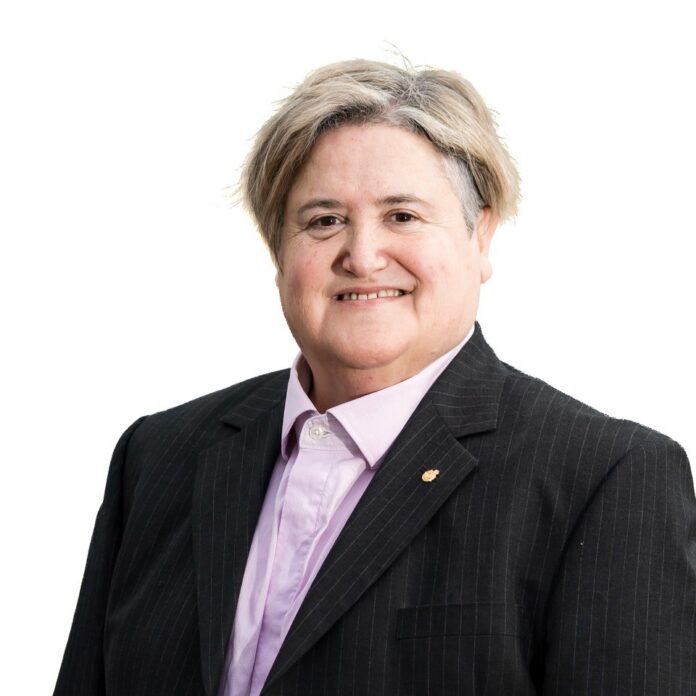
Tony Briffa

I was born and raised in the local area and have lived here all my life.

I’m very passionate about our community and supporting people, community groups, businesses and our environment. I have a lifetime of service to our community. I was the Convenor of the Hobsons Bay Residents Association prior to being elected to the Hobsons Bay City Council in 2008.

I was elected Mayor in 2011 and 2022, and was re-elected to the Council in 2012, 2016 and 2020. Professionally my career has included working for Defence, the Australian Federal Police and the aviation provider for Air Ambulance Victoria. I have also business experience and operated an aviation Labour Hire business and held the Labour Hire License.

As a former Bail Justice I refused bail to accused persons that were a risk to the community, and I have been a Justice of the Peace since 2005. I’ve also fostered children and adopted one of them.

I’m keen to have your support to ensure our community has experienced, effective, strong and genuine representation in Parliament. Over many years I’ve heard community members complain that all major parties take our community for granted. I’m not a member of a political party, and over my years on the council this has ensured my focus remained on fearlessly representing the community over political parties or interests and allowed me to challenge the inequities of funding for our area by successive State Governments.

If elected, I’ll work hard for you and be accessible and accountable to our community at all times. I’ll do politics differently. For more information about me, my policies and contact details visit www.briffa.org

Question 1: Are you aligned with any political parties (for independents) and to where are your preferences going?

I am a Community Independent and am not a member of a party or affiliated with a party.

I’m asking voters to Vote 1 for Tony Briffa, and to allocate their preferences to whoever they like. My “How to Vote” card will not be encouraging preferences for any of the major parties – voters can decide that for themselves.

Question 2: What is your position on data centres in the western suburbs? Do you think there should be a moratorium? Should they be independently powered by wind, solar, coal, or nuclear?

I appreciate having data centres in Australia can improve sovereignty in artificial intelligence and provide support for the AI used in things like medical research and cyber security.

However, applications for such developments must be put on hold while Victoria does not have adequate planning rules to address serious issues about the safety of these centres, their use of power, water and land, their impact on the community and environment, the storage and transportation of dangerous goods, and waste management.

There should be adequate buffer distances around Data Centres, and these should be significantly more than the 150m announced by the Premier last month.

Data centres consume significant amounts of both power and water and if not properly managed can impact the community’s access to them, raise their costs and undermine climate targets. Their backup power is also a significant safety and environmental concern.

Generators at data centres utilise significant volumes of diesel and gas which is dangerous so close to homes and cause massive greenhouse gas emissions. All power should be restricted to new renewable sources and battery backup.

Additionally, we need to protect our drinking water and require data centres to use recycled or storm water for cooling.

The government must stop any consideration of applications for Data Centres until the rules that establish the criteria for their safe location, use of essential community utilities and environmental impact are established. Any rules introduced should apply to all applications for Data Centres, including applications already lodged.

Allowing existing applications to proceed without having to comply to the new rules disproportionately disadvantage communities in Melbourne’s West.

Question 3: How will you improve public transport options in the west?

My years on the local council helped me gain a deep understanding of the importance of an integrated transport strategy that combines different modes of transport including public transport (e.g. trains and buses), cycling, walking trails and roads.

I support enhancing public transport including the re-establishment of a train station in Altona North, providing cleaner, more efficient and more regular local buses, and a reduction in public transport fares for everyone.

I strongly believe trucks must comply with local curfews, route bans and using appropriate routes to ensure the community isn’t impacted by poor air quality, noise and traffic congestion.

Level crossing removals will only proceed if there is agreement with the community about the project design.

We also need urgent action on local roads. I will negotiate for additional funding to get them to an acceptable standard and to ensure they are maintained.

Question 4: What will you do to reduce air pollution in the western suburbs?

We have significant environment issues in the local area, and over the last 25 years I have campaigned to improve our air quality, creeks, foreshore, reserves, contaminated industrial sites and more. I have also campaigned against dirty industry.

I will fight continue to protect and improve our environment.

The two West Gate Tunnel ventilation stacks must have filters installed, and industry will not be allowed to emit dust, fumes and foul odours over residential areas.

Hazardous or dangerous substances must not be located near homes and schools, and appropriate buffer zones must be introduced and enforced.

I will also fight to ensure unused industrial land is decontaminated, and that the water quality of our creeks and bay is regularly monitored and improved.

I will also continue to fight to protect natural green recreational spaces and reserves as they are already a valuable community asset.

I understand the importance of responding appropriately to Climate Change and support strengthening Victoria’s Net Zero pollution reduction targets.

Question 5: How do you propose to deal with homelessness and housing affordability in the West?

Homelessness and housing affordability are significant issues, along with the cost of living crisis. It needs to be addressed by several differing programs involving both public and private investment.

People that are homeless, sleeping rough or at risk of losing their home must be provided with immediate support and assistance.

Housing developments must be required to include a suitable percentage of affordable, social and public housing, and surplus government land should be unlocked to enable residential development.

Stock of social and affordable rental housing should be increased, and private rental assistance programs supported through funding.

Question 6: What is your policy on abortion?

I support a person’s right to access abortion services, and for these services to be funded by taxpayers like other many other health services.

Question 7: What should be done to combat crime?

As a Bail Justice I regularly conducted Bail Hearings in our local Police Stations and refused bail to accused people who were likely to commit further offences whilst on bail or with a history of breaching bail.

I will address crime and community safety by having local police stations at Williamstown and Altona opened 24/7 and having more police patrols on the street.

I will prioritise early intervention and diversionary programs to prevent youth offending. Boosting family support services, mental health services and family violence intervention services will also help prevent crime and domestic violence.

I will support initiatives to reduce domestic violence and support family members affected by family violence.

Share

Lower house districts

Parties

Subscribe

Related articles