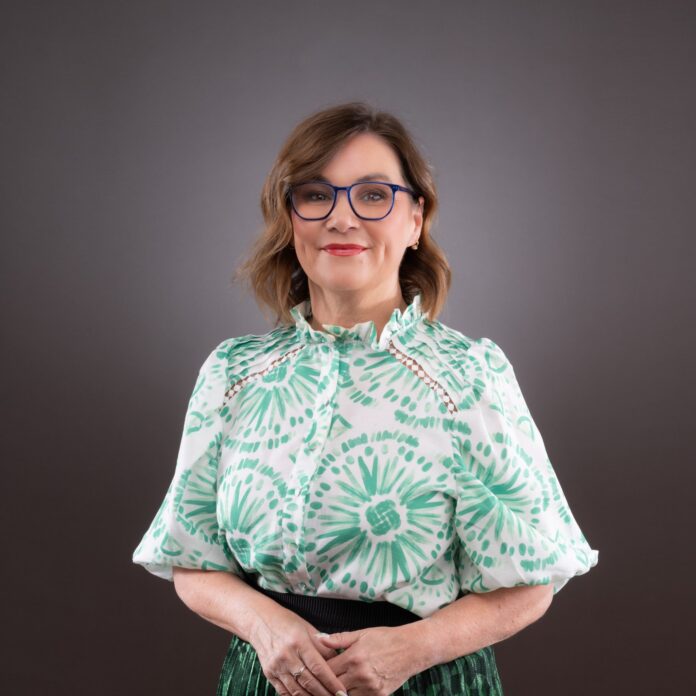
Gill Gannon

I am a local business owner, community advocate and experienced leader standing for the West Party in the Victorian state election.

I live in the Williamstown electorate and own Wilde Interiors, a small business in Newport.

I have spent years working alongside local businesses, residents and community organisations to improve the place I call home.

As President of the Newport Traders Association for the past eight years, I have worked closely with Hobsons Bay City Council, local businesses and government representatives to advocate for safer streets, stronger local businesses and a more vibrant community.

I have also served as President of Home Road Kindergarten and been involved with Sacred Heart Primary School as well as the committee of Williamstown Juniors Football Club. My experience spans management, project management, people and culture across both the private and public sectors.

I currently lead local initiatives focused on business safety and community wellbeing, including the Safer Businesses, Safer Hobsons Bay project.

As a mother of three young adult children, I understand the pressures facing families, small businesses and residents.

Having spent the last 23 years in this community, I have a strong connection to the people and places that make the inner West special.

I am standing because I believe the people in the electorate of Williamstown deserve strong representation, practical solutions and a local voice that listens, and fights for all of them without compromise.

I want to offer voters a fresh choice and a different approach to politics: community-led, accountable and focused on delivering outcomes for the west. My commitment is simple: I’m local, I’m proven, and I’m ready.

Question 1: Are you aligned with any political parties (for independents) and to where are your preferences going?

I am standing as a candidate for the West Party, a new political party focused on delivering better outcomes for Melbourne’s west.

At the time of writing, nominations are still open and I haven’t made a decision about preferences. I want to see exactly who is contesting the election and understand where each candidate stands on the issues that matter to our community.

I am not running this campaign simply to help someone else win. I am running to give voters a genuine fresh choice and to secure the strongest possible outcome for the people of the west.

Once nominations have closed and the field is confirmed, I will make my preference decision and publicly share my position on my social media pages. Any decision will be made carefully, with the interests of our community front and centre.

Question 2: What is your position on data centres in the western suburbs? Do you think there should be a moratorium? Should they be independently powered by wind, solar, coal, or nuclear?

Data centres have a place in our modern economy, but their development must be properly planned and must not come at the expense of the health, safety and liveability of local communities.

The western suburbs are already carrying a significant burden of industrial development, freight activity and environmental impacts.

We cannot continue approving major projects without understanding their cumulative effects on our communities, infrastructure, water and energy supplies.

I support a moratorium on new data centre approvals until Victoria has a clear planning framework that addresses site suitability, cumulative impacts, emissions, water use, energy demand and community consultation.

Projects must be assessed independently and transparently, with meaningful community input. Data centres should demonstrate how they will meet their energy needs without placing additional pressure on households or the electricity grid.

Renewable energy should be prioritised, supported by appropriate storage and reliable supply.

The key issue is not simply which energy source is used.

It is whether these projects are appropriately located, responsibly powered and subject to strong environmental and planning standards. The west should not become the default location for every major industrial project.

Question 3: How will you improve public transport options in the west?

Public transport in Melbourne’s west needs to be reliable, frequent, accessible and connected to where people actually live, work and study.

My priorities include:

  • Delivering a commitment to a Paisley railway station to better serve Altona North and surrounding communities.
  • Improving train frequency and reliability, particularly on the Williamstown line, where residents need more frequent services.
  • Advocating for better bus services, including improved connections between Altona North, Spotswood, South Kingsville and key employment and transport hubs.
  • Reviewing bus routes to better connect growing residential areas with train stations, schools, shopping centres and employment precincts.
  • Ensuring major developments are supported by public transport infrastructure before communities are left struggling with congestion.
  • Improving accessibility, safety and passenger facilities across the network.

The west is growing, but transport planning has not kept pace. We need a long-term, integrated plan that connects our suburbs and gives people a genuine alternative to driving.

Question 4: What will you do to reduce air pollution in the western suburbs?

Residents in Melbourne’s west deserve the same clean air and environmental protection as people in every other part of Victoria.

Our communities are already surrounded by major roads, freight corridors, industrial facilities and other sources of pollution. We need stronger action to understand and reduce the cumulative impact on public health.

I would advocate for:

  • Independent, transparent air quality monitoring in affected communities.
  • Stronger emissions standards and enforcement for industrial facilities.
  • Greater scrutiny of proposed developments that could add to existing pollution.
  • Public reporting of pollution data in a format residents can easily understand.
  • A comprehensive review of cumulative industrial impacts across the western suburbs.
  • Better protection of residential areas, schools and sensitive community spaces from harmful emissions.
  • We also need planning decisions to properly consider the combined impact of multiple projects, rather than assessing each development in isolation.

Clean air is not a luxury. It is a basic community health issue, and residents deserve transparency and accountability.

Question 5: How do you propose to deal with homelessness and housing affordability in the West?

Housing affordability and homelessness are serious challenges affecting individuals, families and communities across Melbourne’s west.

Everyone deserves a safe, secure place to call home. We need a coordinated approach that addresses immediate housing needs while tackling the underlying causes of homelessness and housing stress.

My priorities include:

  • Increasing the supply of genuinely affordable and social housing.
  • Supporting more transitional and crisis accommodation for people experiencing homelessness.
  • Strengthening services that help people remain in their homes before they reach crisis point.
  • Improving access to mental health, family violence, addiction and employment support services.
  • Ensuring new housing developments include appropriate infrastructure, services and transport.
  • Supporting renters through stronger protections and greater housing stability.
  • Working with local councils, housing providers and community organisations to identify local needs and deliver practical solutions.

Housing policy must be about more than building numbers. We need homes people can afford, communities people can thrive in, and support for those who are most vulnerable.

Question 6: What is your policy on abortion?

I support a woman’s right to make decisions about her own body, health and reproductive future.

Abortion should remain safe, legal and accessible in Victoria, with decisions made by the person involved in consultation with their healthcare professionals.

Access should not depend on where someone lives or their financial circumstances.

I support access to appropriate reproductive healthcare, accurate information and compassionate, non-judgmental medical services. These are deeply personal decisions and should not be dictated by political interference.

Question 7: What should be done to combat crime?

People deserve to feel safe in their homes, businesses, streets and public spaces. Community safety requires more than slogans. It needs visible policing, effective prevention, accountability and support for victims.

My priorities include:

  • Ensuring police stations are appropriately staffed and accessible to local communities.
  • Improving police resourcing and frontline response capacity across the west.
  • Strengthening neighbourhood policing and relationships between police and residents.
  • Addressing repeat offending and ensuring consequences for criminal behaviour.
  • Investing in early intervention programs for young people at risk of entering the justice system.
  • Supporting victims of crime and improving access to services.
  • Improving lighting, public space design and safety around transport hubs and shopping precincts.
  • Tackling the causes of crime through better access to mental health, housing and community support.

As a local business owner and community advocate, I have worked directly with traders, residents, council and local police on safety issues. We need a practical, coordinated approach that supports police, protects victims and addresses the issues that contribute to crime.

Community safety must be a priority, not a political talking point.

Share

Lower house districts

Parties

Subscribe

Related articles