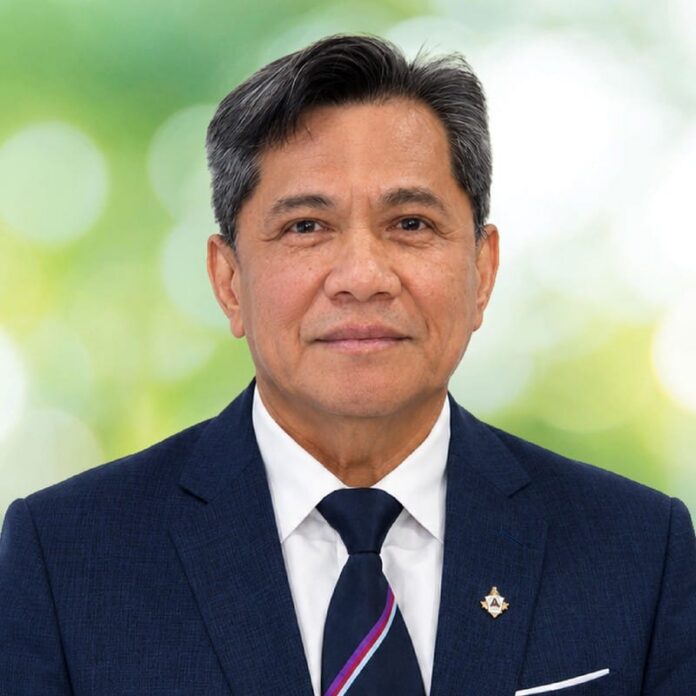
Rufo Paredes

Party:

Rufo Paredes is a community advocate, migration consultant, company director and long-standing resident of Melbourne’s western suburbs.

Having lived and worked in the west for approximately three decades, he brings extensive professional experience and a longstanding commitment to community service. With academic qualifications in Law, Accounting and Migration Law, Rufo has devoted much of his professional career to assisting individuals, families, migrants and businesses in navigating complex legal and administrative systems.

His community involvement includes supporting multicultural organisations, grassroots initiatives and volunteer activities aimed at strengthening civic participation, social inclusion and opportunities for local residents.

Rufo has also been involved in workplace representation and community advocacy, providing him with firsthand experience of the challenges faced by working families, small businesses and people seeking fair treatment from government institutions.

His decision to stand for the Victorian Parliament reflects his belief that Melbourne’s rapidly growing western suburbs deserve greater attention, improved infrastructure and more accountable representation. He is particularly concerned about public transport, community safety, housing affordability, environmental protection, cost-of-living pressures and the increasing demands placed on local services.

Rufo believes that government must balance economic development with responsible population planning, environmental sustainability and the protection of established communities. His guiding principles are sincerity, competence, integrity and service to others. He believes that effective political representation begins with listening to residents, understanding their difficulties and advocating for realistic solutions.

For Rufo, public service is not simply about holding elected office. It is about accepting responsibility, respecting the dignity of individuals and working towards a safer, fairer and more prosperous future for Melbourne’s west.

Question 1: Are you aligned with any political parties (for independents) and to where are your preferences going?

I am standing as the endorsed candidate for Pauline Hanson’s One Nation in the electoral district of Laverton. My candidacy reflects my commitment to responsible government, transparency, community safety, economic opportunity and the interests of local residents.

As I am not an independent candidate, the question of political alignment does not arise. Any formal preference recommendations will be communicated in accordance with the party’s final electoral arrangements.

Ultimately, voters remain free to determine their own preferences. I respect that democratic choice and believe every candidate should be judged on their integrity, policies and capacity to represent the community.

Question 2: What is your position on data centres in the western suburbs? Do you think there should be a moratorium? Should they be independently powered by wind, solar, coal, or nuclear?

Data centres are becoming increasingly important to Australia’s digital economy, creating opportunities for investment, employment and technological development. However, their expansion must be balanced against the legitimate concerns of surrounding communities.

My principal concern is the cumulative demand these facilities place on electricity, water, land and essential infrastructure. I support consideration of a temporary moratorium on new large-scale data centre approvals in areas where infrastructure capacity, environmental impacts and community concerns have not been adequately assessed.

Such a pause should allow independent assessments of electricity demand, water consumption, environmental impacts and the long-term effects on surrounding residential communities.

Data centre operators should demonstrate credible plans for meeting their substantial energy requirements without imposing additional financial burdens on households and small businesses.

I support evaluating a combination of reliable energy technologies, including renewable generation, storage and other technically viable sources. Nuclear energy may also be considered in longer-term national energy discussions, subject to legal, safety and economic requirements.

Any proposed development must meet strict planning and environmental standards, involve meaningful community consultation and demonstrate measurable local benefits. Economic development is welcome, but it must never come at the expense of community wellbeing.

Question 3: How will you improve public transport options in the west?

Melbourne’s western suburbs have experienced substantial population growth, yet transport infrastructure and services have not consistently kept pace with community needs.

Residents deserve public transport that is reliable, accessible, affordable and safe. I would advocate for improved train frequency and reliability along the Werribee and Sunbury corridors, stronger bus connections between residential neighbourhoods and railway stations, and improved accessibility for elderly passengers and people with disabilities.

I would also support continued scrutiny of major transport commitments, including rail improvements serving Melbourne’s growing western suburbs, to ensure projects are delivered transparently and provide measurable benefits.

Safety around railway stations, lighting, pedestrian access and commuter facilities also requires attention. Improving transport is not simply about building additional infrastructure.

It is about ensuring existing services operate efficiently, connect communities and reduce the time people spend travelling to work, education and essential appointments. Melbourne’s west deserves transport investment that reflects its population, economic contribution and future growth.

Question 4: What will you do to reduce air pollution in the western suburbs?

Air pollution is an important public health and environmental issue, particularly in communities located near industrial facilities, freight corridors and heavily trafficked roads.

Residents of Melbourne’s west deserve the same environmental protections and quality of life enjoyed elsewhere in Victoria. I support stronger air-quality monitoring, transparent reporting of pollution levels and consistent enforcement of environmental regulations. Industrial operators should be held accountable for emissions and required to comply with appropriate health and environmental standards.

I would also advocate for improved freight planning, reduced traffic congestion, stronger environmental assessments of new industrial developments, and increased tree planting and green buffers where appropriate.

Community concerns about industrial expansion should be taken seriously, with residents given meaningful opportunities to participate in planning decisions. Economic activity and environmental responsibility should complement one another.

Protecting clean air is not an obstacle to development. It is an essential part of responsible development.

Question 5: How do you propose to deal with homelessness and housing affordability in the West?

Homelessness and housing affordability require coordinated, practical and compassionate responses.

Rising rents, financial pressures and limited housing availability have placed considerable strain on individuals and families throughout Melbourne’s western suburbs.

I support stronger crisis accommodation services, improved access to transitional housing and practical assistance for people experiencing housing insecurity.

Long-term solutions must also increase appropriate housing supply while ensuring new residential developments are supported by adequate roads, transport, schools, healthcare and essential services.

Planning decisions should reflect infrastructure capacity and community needs rather than simply increasing housing density without corresponding investment.

I also recognise that homelessness may involve complex circumstances, including unemployment, family violence, disability, financial hardship and mental health difficulties.

Effective responses therefore require cooperation between government, community organisations, housing providers and frontline support services. Every person deserves dignity, safety and a reasonable opportunity to secure stable accommodation.

Question 6: What is your policy on abortion?

I recognise that abortion is a deeply personal, sensitive and complex issue involving ethical, medical and individual considerations.

People hold different views based on their personal beliefs, experiences and circumstances, and those differences deserve respectful discussion.

My approach emphasises compassion, informed decision-making, access to appropriate healthcare and practical support for women and families facing difficult pregnancies.

I believe greater attention should be directed towards accessible maternal healthcare, counselling, family assistance and social services, particularly for women experiencing financial hardship or difficult personal circumstances.

It is important that women receive accurate medical information, appropriate professional care and support without intimidation, discrimination or judgement.

Any proposed legislative changes should be considered carefully, taking account of medical evidence, existing legal protections, ethical concerns and their practical consequences. I believe this issue should be approached with dignity, sensitivity and respect for those directly affected.

Question 7: What should be done to combat crime?

No answer included.

Share

Lower house districts

Parties

Subscribe

Related articles