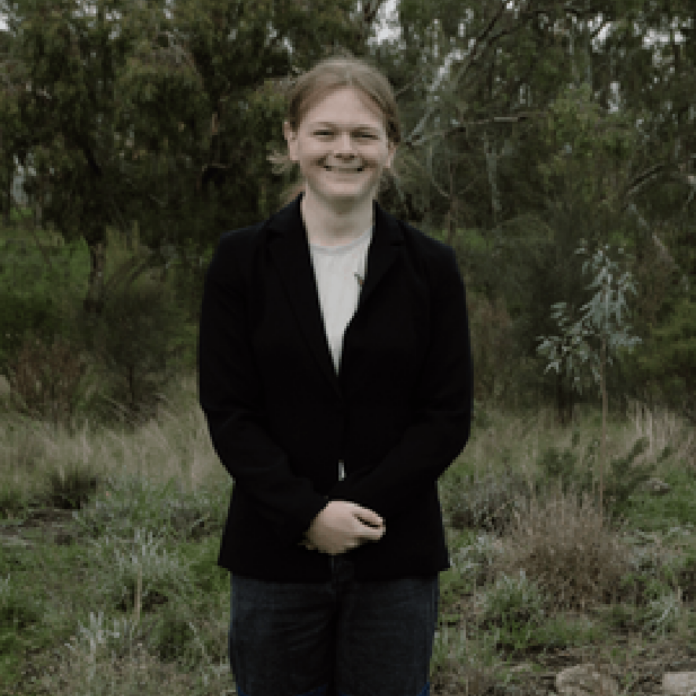
Joyce McDonald

I have lived in Deer Park my whole life.

I am a stubborn cyclist and I’m committed to developing better infrastructure for safe cycling across the electorate and better public transport infrastructure across the west.

My involvement in the scouting movement for over 8 years, included me helping to fundraise for the new Caroline Springs Scout Hall and raise money for the Anzac appeal, this has shown me how our community can achieve so much when we work together.

I have a strong sense of justice and will never be a bystander when others are in need. For example, as a 13 year old I witnessed a bike accident and waited three hours with the seriously injured victim for an ambulance to arrive.

I think the people of Kororoit deserve better public services and infrastructure and we are sick of the Labor government taking us for granted.

Last year when I spoke to Luba Grigorovitch about taking necessary action on climate change she gave me less than 3 minutes of her time.

Young people should have their voices heard. I want to be a politician that is honest and truthful. Throughout this campaign I have not taken a single donation from big corporations and I never will.

Question 1: Are you aligned with any political parties (for independents) and to where are your preferences going?

I’m an endorsed candidate for the Victorian Greens. The Greens position on whether and who we preference is a moral one. Ultimately voters choose their preferences, but the Greens will never recommend voting for parties who have fundamentally corrupt worldviews.

Question 2: What is your position on data centres in the western suburbs? Do you think there should be a moratorium? Should they be independently powered by wind, solar, coal, or nuclear?

We need a moratorium on AI data centres until proper regulations are in place. They should be independently powered by wind, solar and other renewables. The Greens will also make big tech companies pay compensation to local residents that are impacted by already operating AI data centres.

Question 3: How will you improve public transport options in the west?

Firstly we need to electrify the Melton train line and increase frequency to at least every 10 minutes. The Greens have also committed $270 million to improve the bus network across Victoria ensuring you can get to your destination faster and more easily and we will pay for it by making big corporations pay their fair share of tax.

Question 4: What will you do to reduce air pollution in the western suburbs?

We want to stop all new investment in polluting coal and gas, which will also help us reach net zero greenhouse gas emissions by 2035. Our public transport policies will get cars off roads and reduce pollution from exhausts.

Question 5: How do you propose to deal with homelessness and housing affordability in the West?

We will more than double the number of public homes by building 88,000 new dwellings. We’ll also cut stamp duty, saving home buyers $60,000 on the price of an average home.

The Greens will cap rent rises, so rent cannot go up more than wages. We will crack down on dodgy agents and landlords, and make renting secure and fair. We will force landlords to have a licence in order to rent their homes out to people.

Finally, we will invest in support services to break the cycle of homelessness early, and legislate a goal to end homelessness by 2036.

Question 6: What is your policy on abortion?

The Greens have long believed and campaigned for everyone should have free and comprehensive access to abortion and contraception no matter where you live.

Question 7: What should be done to combat crime?

We have a statewide $1 billion commitment to coordinated crime prevention, crisis outreach and frontline mental health, alcohol and other drug, and homelessness services.

This includes practical, community-led prevention and support such as a 24/7 non-police crisis outreach pilot, with trained health and social workers responding to appropriate non-violent crises and connecting people with ongoing care, supported housing and wraparound services for young people aged 18–21 at risk of homelessness, and crisis response and de-escalation training for traders, librarians and frontline community workers.

Share

Lower house districts

Parties

Subscribe

Related articles